Tradition
Diwali
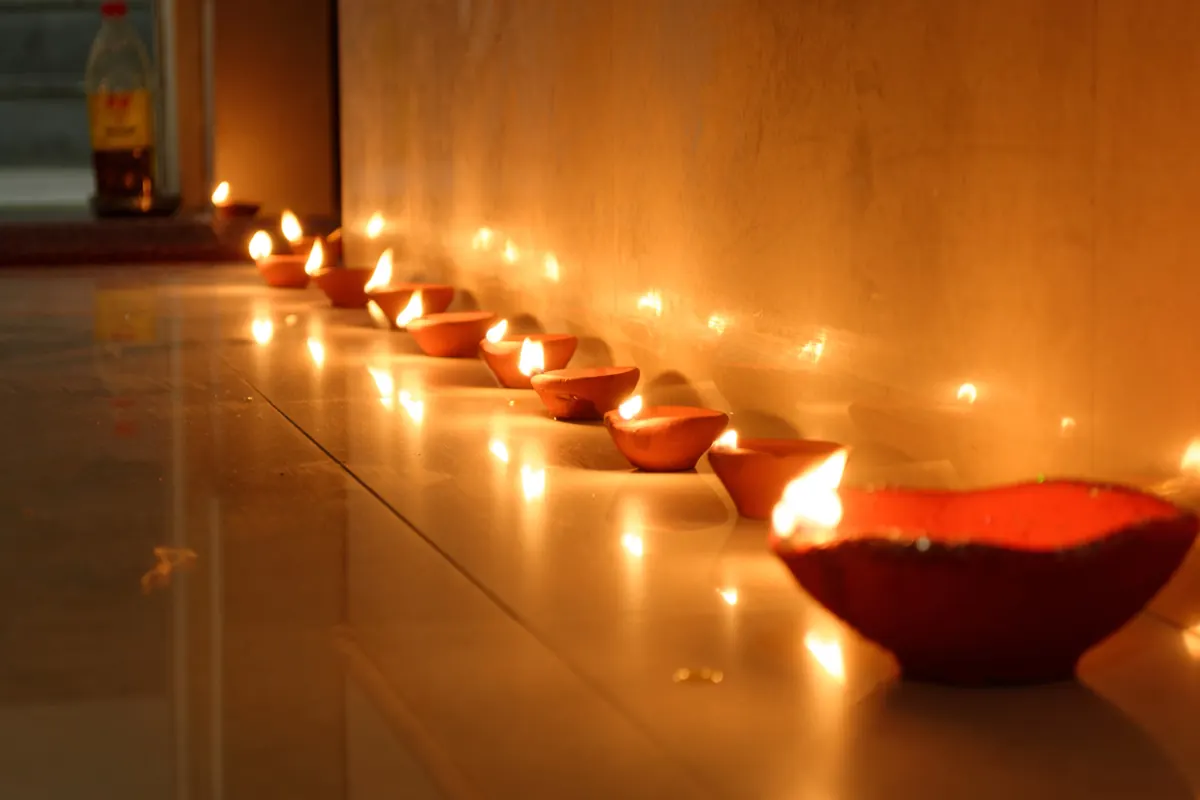
Diwali, from the Sanskrit for "row of lights", is a five-day festival of lamps in October or November. It celebrates light overcoming darkness, and different regions and religions remember different stories with it, including Rama's homecoming to Ayodhya.
- In many Hindu homesLamps welcome Lakshmi, goddess of wealth, on the new moon night.
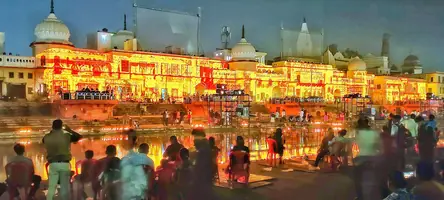
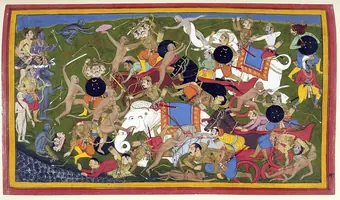
- In North IndiaRama's homecoming to Ayodhya with Sita, Lakshmana and Hanuman, after defeating Ravana.
- In South IndiaThe god Krishna's defeat of the demon Narakasura.
- In BengalThe goddess Kali is worshipped.
- For JainsThe liberation (moksha) of Mahavira; lamps stand for the light of his knowledge.
- For SikhsGuru Hargobind's return to Amritsar from captivity in Gwalior.
Understand more
Simple
Diwali is a five-day festival of lights, usually in late October or November. Families light rows of small oil lamps called diyas, decorate floors with rangoli, wear new clothes, exchange gifts and share meals.
Its central night is the new moon, when many Hindus light lamps to welcome Lakshmi, the goddess of wealth and good fortune.
The stories behind it differ from place to place. In North India it marks Rama's return to Ayodhya; in South India, Krishna's victory over the demon Narakasura; in Bengal, Kali is worshipped. Jains and Sikhs celebrate it too, for their own reasons.
Detailed
A festival of lights
Diwali takes its name from the Sanskrit dipavali, “row of lights”, and generally stands for light overcoming darkness. It lasts five days, from the 13th day of the dark half of the lunar month Ashvina to the 2nd day of the bright half of Karttika, which usually falls in late October or November. It comes twenty days after Dussehra. Explore next: Dussehra
The five days
- The first day is for cleaning the home and buying small gold items.
- The second day, Naraka Chaturdashi, recalls Krishna’s defeat of the demon Narakasura.
- The third day, the new moon, is Lakshmi Puja: families light diyas, candles and fireworks, leave doors and windows open to welcome the goddess Lakshmi, and visit temples.
- The fourth day has several names, including Govardhan Puja and Balipratipada. It recalls Krishna lifting Govardhan Hill to shelter the cowherds from the god Indra’s rain, and merchants open new account books.
- Across the festival, people decorate floors with rangoli of coloured rice, sand or petals, set lamps along the parapets of houses and temples and float them on rivers, wear new clothes, visit, exchange gifts, feast and feed the poor.
Many stories, one festival
Diwali does not mean the same thing everywhere. Some Hindus celebrate it as the marriage of Lakshmi and Vishnu, others as Lakshmi’s birthday. In North India it celebrates Rama’s homecoming to Ayodhya after defeating Ravana. In South India it marks Krishna’s victory over Narakasura. In Bengal, the goddess Kali is worshipped. Explore next: Why is Diwali linked to Rama’s return to Ayodhya?
Beyond Hinduism
Jains celebrate Diwali as the liberation of Mahavira from the cycle of birth and death, and their lamps stand for the light of his knowledge. Since the 18th century, Sikhs have marked it as the return of Guru Hargobind to Amritsar from captivity in Gwalior. Some Buddhists remember Emperor Ashoka’s conversion, and Newar Buddhists in Nepal light lamps and worship the Buddha.
Read it in the Ramayana
Five-minute chapters from the Valmiki Ramayana. More are being added book by book.
Book 6 · Yuddha Kanda
Keep exploring
 QuestionWhy is Diwali linked to Rama's return to Ayodhya?
 TraditionDussehra
 PlaceAyodhya
 StoryThe war in Lanka and Rama's return
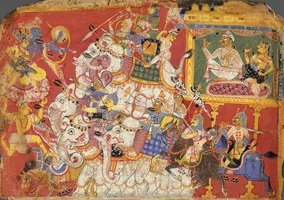 StoryKrishna and Narakasura
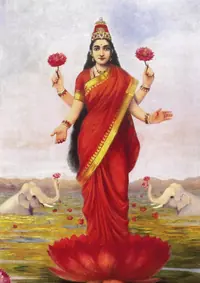 QuestionWhy is Lakshmi worshipped on Diwali?
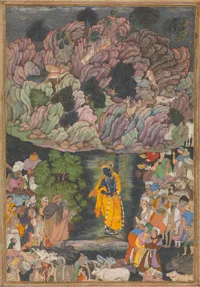 StoryKrishna lifts Govardhan hill
Also named on this page
- Rama
- Rama is the central figure of the Ramayana, the eldest son of King Dasharatha of Ayodhya, and is worshipped by Hindus as the seventh avatar of Vishnu.
- Sita
- Sita is worshipped as an incarnation of the goddess Lakshmi and stands at the heart of the Ramayana as Rama's wife.
- Hanuman
- Hanuman is a vanara, son of the wind god, who served Rama with complete devotion.
- Lakshmana
- Lakshmana was Rama's younger brother, the son of King Dasharatha and Queen Sumitra.
- Ravana
- Ravana was the ten-headed king of the rakshasas who ruled Lanka.
- Lakshmi
- The goddess of wealth and good fortune.
- Vishnu
- Lakshmi's husband. Some celebrate Diwali as their marriage.
- Krishna
- Diwali remembers his defeat of the demon Narakasura, and his lifting of Govardhan Hill.
- Narakasura
- A demon defeated by Krishna, remembered at Diwali in South India.
- Indra
- The god whose rain Krishna sheltered the cowherds from by lifting Govardhan Hill.
- Kali
- A goddess, worshipped in Bengal on Diwali night.
- Mahavira
- The last Tirthankara of the Jains, whose liberation Jains remember at Diwali.
- Guru Hargobind
- Sikh Guru whose return to Amritsar from captivity in Gwalior Sikhs remember at Diwali.
- Emperor Ashoka
- Some Buddhists remember his conversion at Diwali.
- The Buddha
- Newar Buddhists in Nepal light lamps and worship him at Diwali.
Sources
- Encyclopaedia Britannica, "Diwali" · Verified
- Encyclopaedia Britannica, "Dussehra" · Verified