Question
Why is Lakshmi worshipped on Diwali?
Lakshmi is the goddess of wealth and good fortune, and on Diwali's new moon night families light lamps and keep their doors open to invite her into their homes and ask for her blessing of prosperity. Traditions differ on what the night remembers, and in Bengal the goddess Kali is worshipped instead.
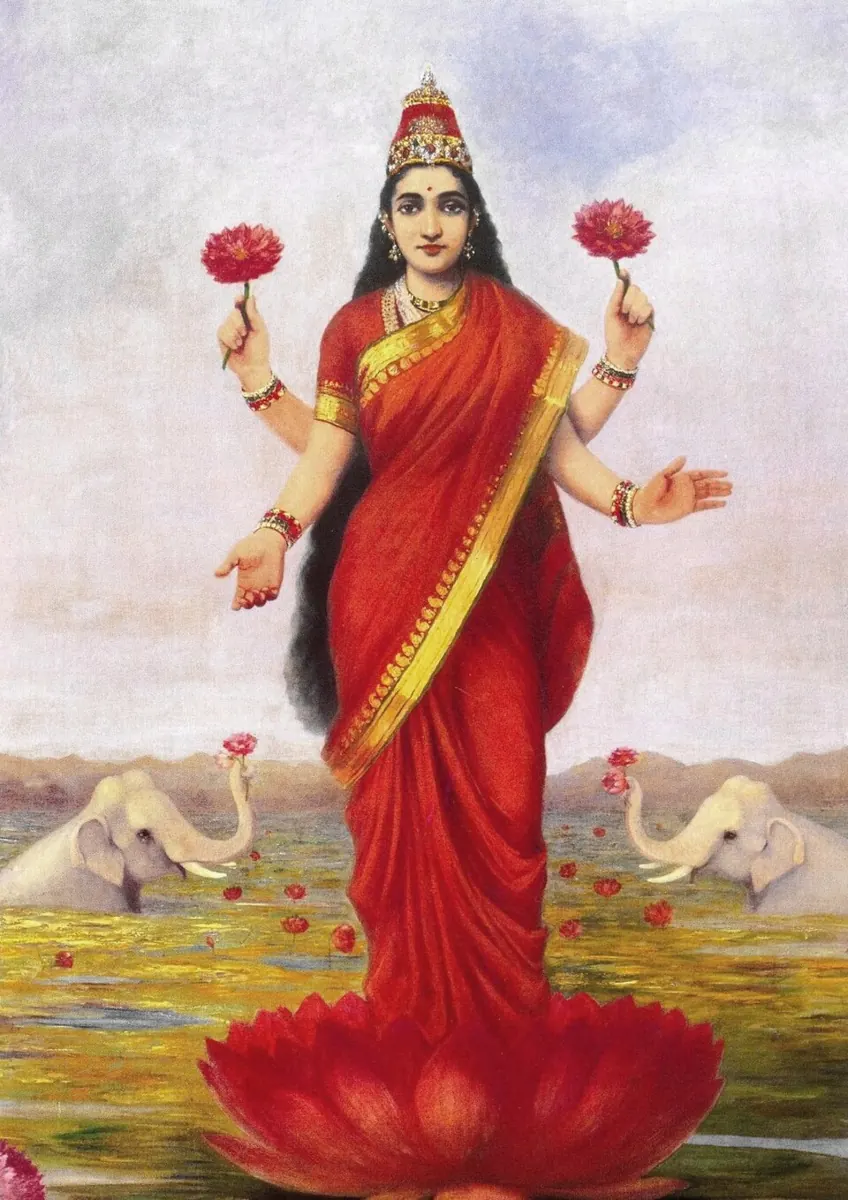
- Who Lakshmi isGoddess of wealth and good fortune, wife of Vishnu, often seated on a lotus.
- Where she came fromIn the most widely told account, she rose on a lotus from the churning of the ocean of milk.
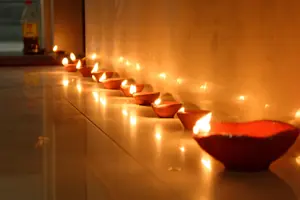
- Lakshmi Puja, the new moon nightLamps are lit and doors and windows left open so she will find her way inside.
- A blessing for the year aheadFamilies pray for prosperity, and merchants open new account books.
- Different reasons, by traditionSome remember her marriage to Vishnu, others her birthday.
- In BengalThe goddess Kali is worshipped at Diwali.
Understand more
Simple
Lakshmi is the Hindu goddess of wealth and good fortune, and the wife of Vishnu. She is often shown seated on a lotus.
The third day of Diwali, the new moon night, is Lakshmi Puja. Families light lamps and leave their doors and windows open, hoping she will find her way inside, and ask for her blessing so the year ahead is prosperous. Merchants hold ceremonies and open new account books.
Not everyone gives the same reason. Some celebrate the night as Lakshmi's marriage to Vishnu, others as her birthday. In North India Diwali also celebrates Rama's homecoming, and in Bengal the goddess Kali is worshipped.
Detailed
Who Lakshmi is
Lakshmi is the Hindu goddess of wealth and good fortune, and the wife of the god Vishnu. She is often shown seated on a lotus, and two of her names, Padma and Kamala, both mean “lotus”. Many Hindus worship her at home, especially on Fridays and on festival days.
In the most widely told account of her origin, she rose from the ocean of milk, seated on a lotus, when the gods and demons churned it. In Hindu tradition she takes a form to accompany Vishnu in each of his incarnations: when he came as Rama, she was Sita. Explore next: Sita
Welcoming her at Diwali
Diwali, the five-day festival of lights, reaches its centre on the third day, the new moon night. This night is Lakshmi Puja. Families light rows of lamps, and the doors and windows of houses are kept open in the hope that Lakshmi will find her way inside. They ask for her blessing so that the coming year will be prosperous. Merchants perform ceremonies and open new account books. Explore next: Diwali
One night, several meanings
Hindus do not all give the same reason for honouring Lakshmi at Diwali. Some celebrate it as the anniversary of her marriage to Vishnu; others observe it as her birthday. Diwali itself carries other meanings too: in North India it celebrates Rama’s homecoming to Ayodhya, in South India Krishna’s defeat of Narakasura, and in Bengal the goddess Kali is worshipped. Explore next: Why is Diwali linked to Rama’s return to Ayodhya?
Lakshmi is honoured earlier in the autumn too, in the middle nights of Navratri. Explore next: Navratri and Durga Puja
Keep exploring
 TraditionDiwali
 QuestionWhy is Diwali linked to Rama's return to Ayodhya?
 Person or deitySita
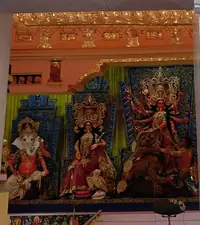 TraditionNavratri and Durga Puja
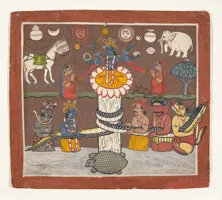 StoryThe churning of the ocean
Also named on this page
- Rama
- Rama is the central figure of the Ramayana, the eldest son of King Dasharatha of Ayodhya, and is worshipped by Hindus as the seventh avatar of Vishnu.
- Ayodhya
- In the Ramayana, Ayodhya is the capital of the kingdom of Kosala, where Rama is born and later crowned.
- Vishnu
- Lakshmi's husband. Some celebrate Diwali night as their marriage.
- Krishna
- In South India, Diwali remembers his defeat of the demon Narakasura.
- Narakasura
- A demon defeated by Krishna, remembered at Diwali in South India.
- Kali
- A goddess, worshipped in Bengal on Diwali night.
- Durga
- The goddess honoured at Navratri and Durga Puja, when Lakshmi is honoured too.
Sources
- Encyclopaedia Britannica, "Diwali" · Verified
- Encyclopaedia Britannica, "Lakshmi" · Verified