Question
Why is Diwali linked to Rama's return to Ayodhya?
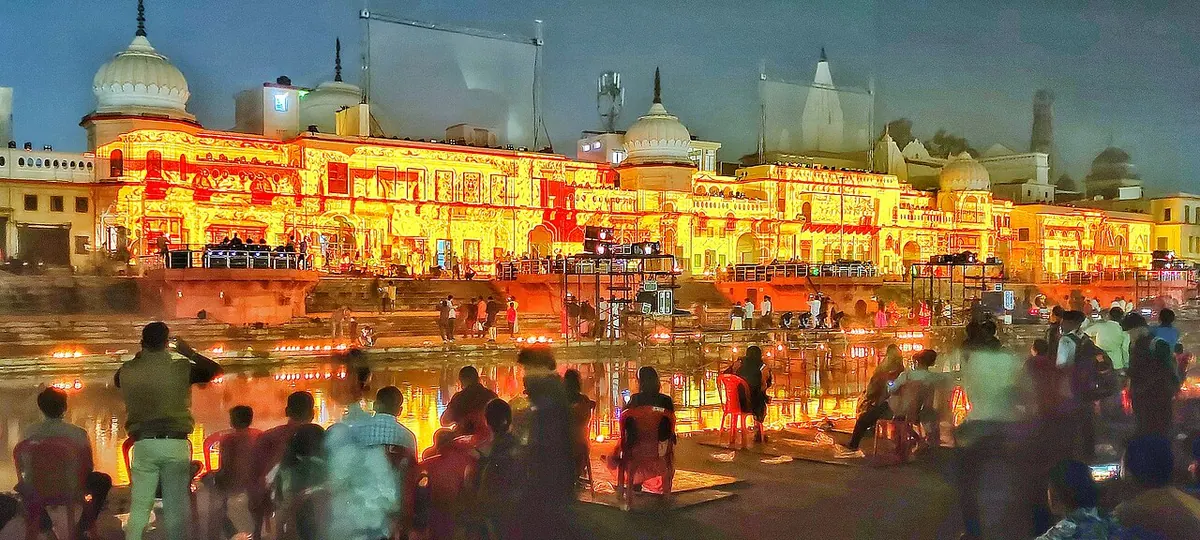
In North India, Diwali celebrates Rama's royal homecoming to Ayodhya after his victory over Ravana. But that is one of several meanings. Elsewhere Diwali honours Lakshmi, Krishna's defeat of Narakasura or the goddess Kali, and Jains and Sikhs mark it for their own reasons.
- North IndiaRama's homecoming to Ayodhya after defeating Ravana.
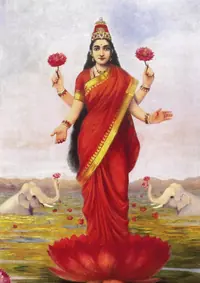
- Many Hindu homesLamps lit to welcome Lakshmi, goddess of wealth.
- South IndiaKrishna's defeat of the demon Narakasura.
- BengalWorship of the goddess Kali.
- JainsThe liberation (moksha) of Mahavira.
- SikhsGuru Hargobind's return to Amritsar from captivity.
Understand more
Simple
Diwali, the festival of lights, means different things in different places. In much of North India, the lamps celebrate Rama coming home to Ayodhya after defeating Ravana.
Across many Hindu homes, lamps are lit to welcome Lakshmi, goddess of wealth. In South India, Diwali marks Krishna's defeat of the demon Narakasura, and in Bengal the goddess Kali is worshipped. Jains remember Mahavira's liberation, and Sikhs remember Guru Hargobind's return to Amritsar.
Detailed
Rama’s homecoming
In North India, Diwali celebrates the royal homecoming of Rama to Ayodhya after his victory over Ravana, which also links it to Dussehra, the festival of that victory. This link comes from festival tradition; the Ramayana tells of Rama’s return, but it is the living tradition that connects it to Diwali. Explore next: What is the Ramayana, and who wrote it?
Not one meaning, but many
Diwali has no single origin story that all Hindus share:
- The most widespread custom is lighting diyas to invite Lakshmi, goddess of wealth.
- In South India, the festival marks Krishna’s defeat of the demon Narakasura.
- In Bengal, the goddess Kali is worshipped.
- The fourth day is kept as Govardhan Puja, remembering Krishna lifting Govardhan Hill.
Beyond Hinduism
- Jains mark the liberation (moksha) of Mahavira, the last Tirthankara.
- Sikhs have celebrated it since the 18th century as the time of Guru Hargobind’s return to Amritsar from captivity in Gwalior.
- Some Buddhists also observe it.
So the answer depends on where you are and whose tradition you follow. Like the Ramayana itself, Diwali is told in many ways. Explore next: Why are there so many versions of the Ramayana?
Read it in the Ramayana
Five-minute chapters from the Valmiki Ramayana. More are being added book by book.
Book 6 · Yuddha Kanda
Keep exploring
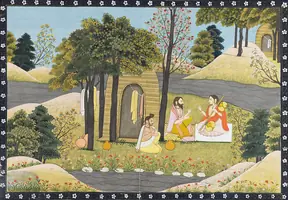 QuestionWhat is the Ramayana, and who wrote it?
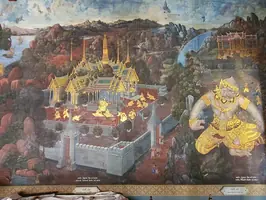 QuestionWhy are there so many versions of the Ramayana?
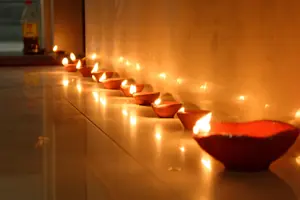 TraditionDiwali
 PlaceAyodhya
 QuestionWhy is Lakshmi worshipped on Diwali?
Also named on this page
- Rama
- Rama is the central figure of the Ramayana, the eldest son of King Dasharatha of Ayodhya, and is worshipped by Hindus as the seventh avatar of Vishnu.
- Ravana
- Ravana was the ten-headed king of the rakshasas who ruled Lanka.
- Lakshmi
- The goddess of wealth and good fortune.
- Krishna
- In South India, Diwali remembers his defeat of the demon Narakasura.
- Narakasura
- A demon defeated by Krishna, remembered at Diwali in South India.
- Kali
- A goddess, worshipped in Bengal on Diwali night.
- Mahavira
- The last Tirthankara of the Jains, whose liberation Jains remember at Diwali.
- Guru Hargobind
- Sikh Guru whose return to Amritsar from captivity in Gwalior Sikhs remember at Diwali.
Sources
- Encyclopaedia Britannica, "Diwali" · Verified