Tradition
Dussehra
Dussehra, also called Vijayadashami, falls on the tenth day of the bright half of Ashvina, in September or October. In much of North India it celebrates Rama's victory over Ravana; in eastern India the same day ends the Durga Puja, honouring the goddess Durga's victory over the demon Mahishasura.
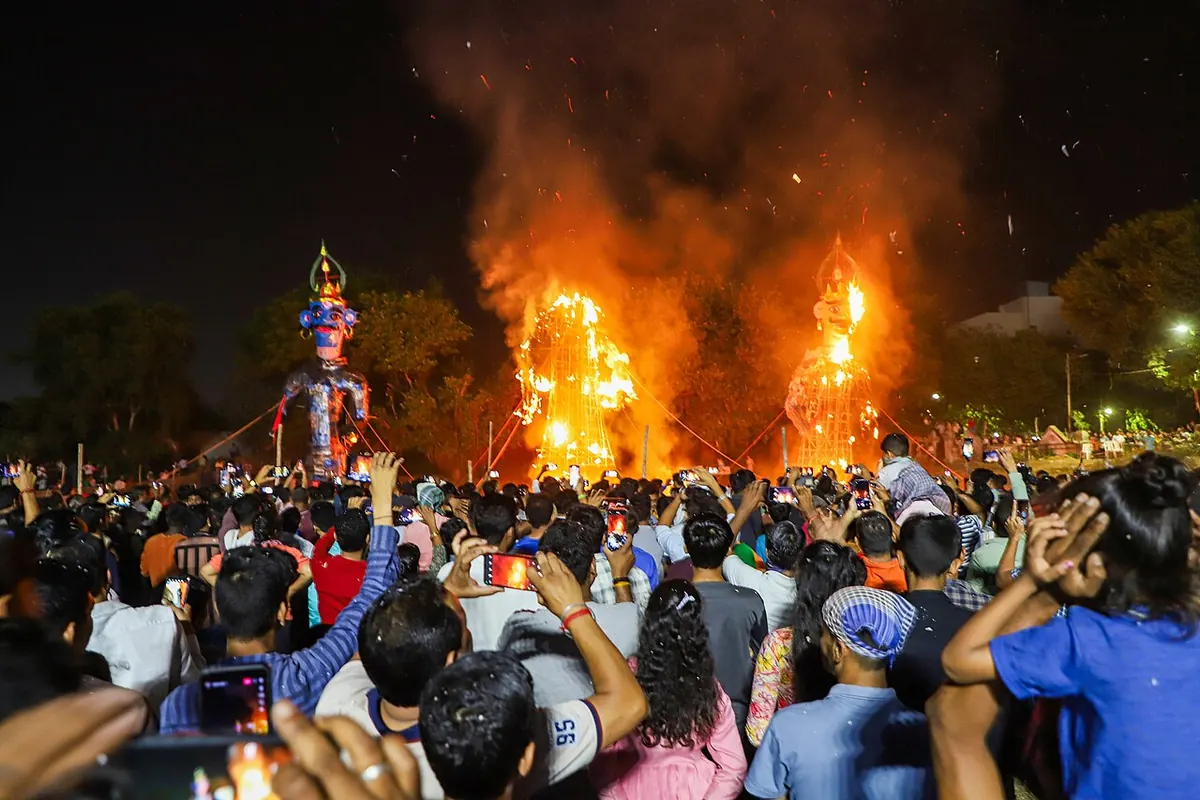
- North and West IndiaRamlila plays of Rama's story end with burning effigies of Ravana, his son Meghanada and his brother Kumbhakarna.
- East IndiaThe last day of Durga Puja; images of the goddess Durga are immersed in water as she departs.
- South IndiaGolu displays of dolls, and Ayudha Puja, when tools and objects of knowledge are honoured.
- Kullu, Himachal PradeshProcessions of local deities, ending with a bonfire for Hanuman burning Lanka.
Understand more
Simple
Dussehra comes at the end of Navratri, the "nine nights" festival of autumn, on the tenth day. Its name means the defeat of the ten-headed Ravana; its other name, Vijayadashami, means "victory on the tenth day".
In North and West India, people stage Ramlila, plays of Rama's story, and at dusk burn huge effigies of Ravana and his brother and son.
In eastern India the day ends the Durga Puja, when images of the goddess Durga are immersed in water. In the South, homes display dolls and people honour their tools and books. Everywhere it stands for the victory of good over evil.
Detailed
Two names, two meanings
The name Dussehra comes from the Sanskrit dasha, “ten”, and hara, “defeat”: the defeat of the ten-headed demon king Ravana. Its other name, Vijayadashami, means “victory on the tenth day”. The two names are often used for the same day, though their meanings differ. It falls on the tenth day of the bright half of the month Ashvina, in September or October, at the close of Sharad Navratri, the “nine nights” of autumn. Everywhere, it stands for the victory of good over evil.
Rama’s victory
In the Valmiki Ramayana, Rama kills Ravana with a blazing arrow made by the god Brahma. In North and West India, Dussehra celebrates this victory. Towns stage Ramlila, folk plays of the Ramayana, which end with Ravana’s defeat. At dusk, huge effigies of Ravana, his son Meghanada and his brother Kumbhakarna, often packed with firecrackers, are burned in open fields. Explore next: The war in Lanka and Rama’s return
Durga’s victory
In eastern India, especially West Bengal and Assam, the same day is the last of the ten-day Durga Puja. It celebrates the goddess Durga’s victory over Mahishasura, the buffalo demon, and her return to Mount Kailash. Images of Durga are immersed in water as she departs. Durga Puja in Kolkata was added to UNESCO’s list of the world’s intangible cultural heritage in 2021.
Other ways to keep it
In South India, families set out Golu, displays of dolls and figurines, and on Ayudha Puja honour tools and objects of knowledge alongside the goddesses Lakshmi, Saraswati and Parvati. In Kullu, in Himachal Pradesh, processions of local deities replace effigies, and the festival ends with a bonfire for Hanuman burning Lanka. Explore next: Hanuman
Dussehra also starts the preparations for Diwali, which comes twenty days later. Explore next: Diwali
Read it in the Ramayana
Five-minute chapters from the Valmiki Ramayana. More are being added book by book.
Book 6 · Yuddha Kanda
Keep exploring
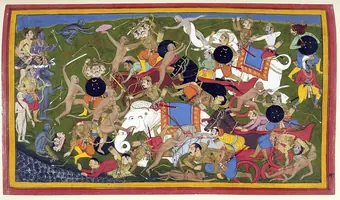 StoryThe war in Lanka and Rama's return
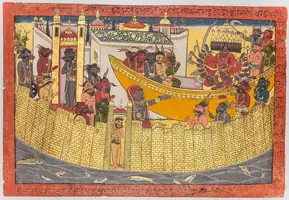 QuestionWhy did Ravana take Sita?
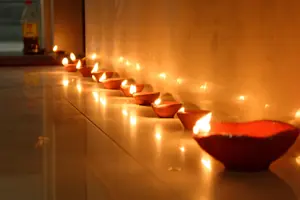 TraditionDiwali
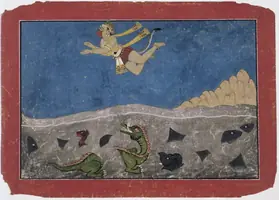 Person or deityHanuman
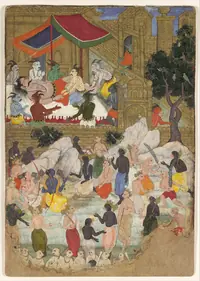 PlaceLanka
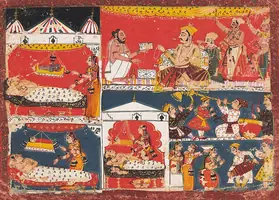 TraditionRama Navami
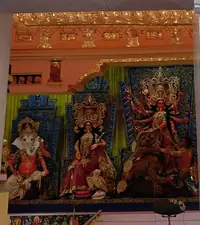 TraditionNavratri and Durga Puja
Also named on this page
- Rama
- Rama is the central figure of the Ramayana, the eldest son of King Dasharatha of Ayodhya, and is worshipped by Hindus as the seventh avatar of Vishnu.
- Ravana
- Ravana was the ten-headed king of the rakshasas who ruled Lanka.
- Kumbhakarna
- Ravana's brother. His effigy is burned with Ravana's on Dussehra.
- Meghanada
- Ravana's son. His effigy is burned with Ravana's on Dussehra.
- Durga
- The goddess whose victory over the buffalo demon Mahishasura Durga Puja celebrates.
- Mahishasura
- The buffalo demon defeated by the goddess Durga.
- Lakshmi
- A goddess honoured with Saraswati and Parvati on Ayudha Puja.
- Saraswati
- A goddess honoured with Lakshmi and Parvati on Ayudha Puja.
- Parvati
- A goddess honoured with Lakshmi and Saraswati on Ayudha Puja.
- Brahma
- The god who made the arrow with which Rama killed Ravana.
Sources
- Encyclopaedia Britannica, "Dussehra" · Verified
- Encyclopaedia Britannica, "Dussehra and Vijayadashami" · Verified
- Valmiki Ramayana, Yuddha Kanda sarga 108 · Verified