Question
Why did Bharata refuse to become king?
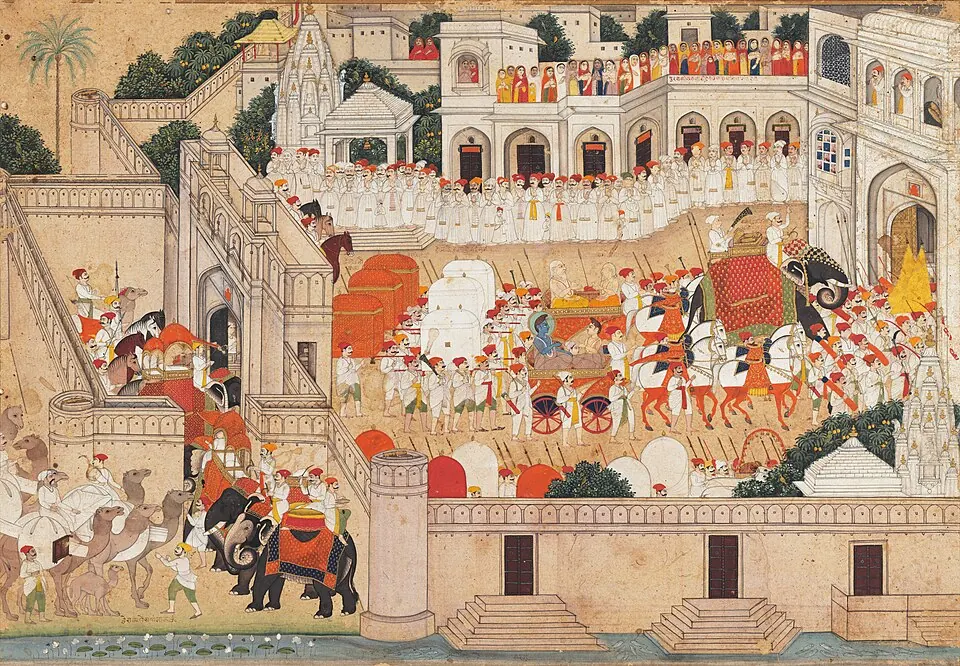
In the Valmiki Ramayana, Bharata saw the throne his mother won for him as wrongly taken from Rama. He refused it, went to the forest to bring Rama back, and when Rama would not return, ruled only in his name, placing Rama's sandals on the throne.
- Prince Bharata comes homeHis father, King Dasharatha, is dead, and his elder brother Rama is in exile.
- He refuses the throneHe rebukes his mother Kaikeyi, who won it for him, and vows to bring Rama back.
- He goes to find Rama in the forestHe begs Rama to return and rule.
- Rama will not break their father's word
- Rama gives Bharata his sandalsBharata offers them; Rama steps into them and hands them back.
- Bharata rules in Rama's nameAs an ascetic in Nandigrama for fourteen years, with the sandals on the throne.
Understand more
Simple
Bharata was away when Rama was exiled. When he came home, his father was dead and his brother gone. He blamed his mother Kaikeyi and said he would not accept the kingdom.
He went to the forest to bring Rama back, but Rama would not break their father's word. So Bharata asked for Rama's sandals, set them on the throne, and ruled for fourteen years as Rama's stand-in, living simply outside the city.
Detailed
Coming home to a changed kingdom
Bharata had been staying with his uncle in Kekaya. He returns to find his father dead and Rama in the forest. He tells Kaikeyi that a kingdom is worthless to him without his father and brother, calls her plan sinful, and says he will not fulfil her wish. Instead he will bring Rama back and serve him. Explore next: Who was Kaikeyi, and why did she ask for Rama’s exile?
The meeting in the forest
Bharata finds Rama and begs him to take the kingdom. Rama refuses: he will not break their father’s word. Bharata then offers a pair of gold-adorned sandals and asks Rama to step into them. Rama does, and gives them to him.
Fourteen years as a stand-in
Bharata vows to live outside the city as an ascetic, in bark and matted hair, for fourteen years, with the kingdom run in the sandals’ name. He says he will enter fire if Rama does not return when the time is up. At Nandigrama he places the sandals on the throne under the royal canopy and reports every matter of state to them first.
Why it matters
Bharata could have kept the throne. The text shows him treating Rama as the rightful king and himself only as a caretaker. Many readers see him as a model of loyalty and selflessness, a reading drawn from the story rather than stated in it. Explore next: What does dharma mean in the Ramayana?
Read it in the Ramayana
Five-minute chapters from the Valmiki Ramayana. More are being added book by book.
Book 2 · Ayodhya Kanda
Keep exploring
 QuestionWhy did Rama go into exile?
 QuestionWho was Kaikeyi, and why did she ask for Rama's exile?
- QuestionWhat does dharma mean in the Ramayana?
 PlaceChitrakuta
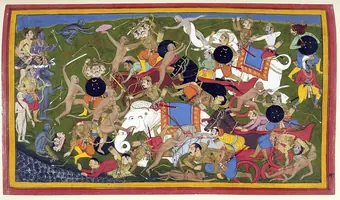 StoryThe war in Lanka and Rama's return
 PlacePrayagraj
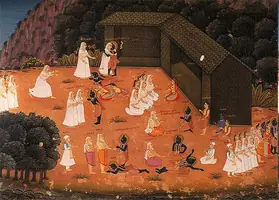 Person or deityBharata
Also named on this page
- Rama
- Rama is the central figure of the Ramayana, the eldest son of King Dasharatha of Ayodhya, and is worshipped by Hindus as the seventh avatar of Vishnu.
- Ayodhya
- In the Ramayana, Ayodhya is the capital of the kingdom of Kosala, where Rama is born and later crowned.
- Dasharatha
- Dasharatha was the king of Ayodhya and the father of Rama, Bharata, Lakshmana and Shatrughna.
- Kaikeyi
- Kaikeyi was one of King Dasharatha's three queens, a princess of Kekaya and the mother of Bharata.
Sources
- Valmiki Ramayana, Ayodhya Kanda 2.73.2, 2.73.25–27 · Verified
- Valmiki Ramayana, Ayodhya Kanda 2.112.10–26 · Verified
- Valmiki Ramayana, Ayodhya Kanda sarga 115 · Verified