Story
The descent of the Ganga
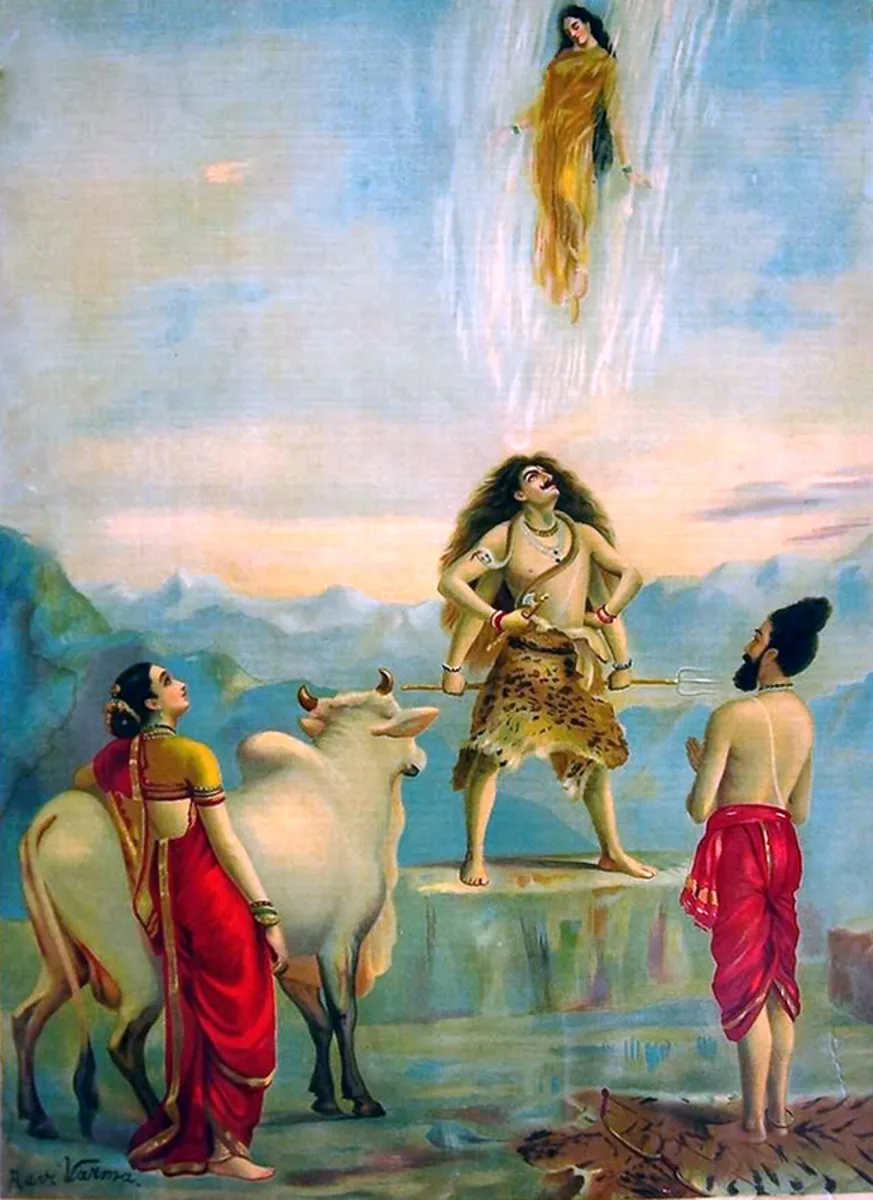
King Sagara's sixty thousand sons were burned to ashes by the sage Kapila, and only the waters of the heavenly river Ganga could free them. After three generations of effort, their descendant Bhagiratha won her descent through austerities; Shiva caught her fall in his hair, and she followed Bhagiratha's chariot across the land to their ashes.
Read the 5-minute story5 min read · told as scenes, from the Valmiki Ramayana (Bala Kanda), with the Bhagavata Purana
- The stolen horseKing Sagara's sacrificial horse disappears, and his sixty thousand sons dig through the earth to find it.
- Burned to ashesThey find it near the sage Kapila, take him for the thief, and are burned to ashes by his anger.
- Two generations failOnly the Ganga's waters can free them. Amshuman and Dilipa try to bring her down, and fail.
- Bhagiratha's austeritiesBrahma grants his wish, but only Shiva can bear the force of her fall.
- Caught in Shiva's hairShiva holds the Ganga in his matted locks, then releases her gently to the earth.
- Sagara's sons are freedShe follows Bhagiratha's chariot to the ashes, and they rise to heaven.
Understand more
Simple
King Sagara of Ayodhya was performing a great horse sacrifice when the horse was stolen. His sixty thousand sons dug deep into the earth to find it, and found it grazing near the sage Kapila. They took him for the thief and rushed at him, and his anger burned them all to ashes.
Their souls could be freed only by the waters of the Ganga, the river of heaven. Sagara's grandson Amshuman and his son Dilipa tried all their lives to bring her down, and failed.
Dilipa's son Bhagiratha gave up his kingdom for austerities. Brahma granted his wish, but warned that the earth could not bear the river's fall. Only Shiva could.
Shiva caught the Ganga in his matted hair and released her gently. She followed Bhagiratha's chariot to the ashes, and Sagara's sons rose to heaven. In his honour, she is also called Bhagirathi.
Detailed
Where the story is told
In the Valmiki Ramayana, the young Rama travels with the sage Vishvamitra. One evening they camp on the bank of the Ganga, and Rama asks about the river. Vishvamitra’s answer turns out to be the story of Rama’s own ancestors: Sagara, Amshuman, Dilipa and Bhagiratha are all named in his line, the line of the kings of Ayodhya. Explore next: Shiva’s bow and the wedding of Rama and Sita
The Bhagavata Purana tells the story too, and this page adds its details where they help. The two differ slightly: the Bhagavata says that Indra stole Sagara’s horse, and that the fire which burned his sons did not come from the sage Kapila’s eyes. The Ramayana calls Kapila a form of Vishnu himself.
What the texts draw out
A task of three generations. Sagara’s grandson Amshuman tried all his life to bring the Ganga down to earth, and so did his son Dilipa. Both died without succeeding. Only Bhagiratha, after long austerities, won Brahma’s blessing.
Force made gentle. Brahma warns that the earth cannot bear the Ganga’s fall, and that only Shiva can hold her. Shiva catches her in his matted locks and lets her go gently, in seven streams. The Bhagavata adds that the Ganga herself worried about taking on the sins of everyone who would bathe in her.
A river with many names. The sage Jahnu drank her and let her out from his ears, so she is called Jahnavi, “daughter of Jahnu”. Brahma tells Bhagiratha that she will be known as his daughter too, Bhagirathi.
Where the story lives on
The Ganga has been the holy river of Hinduism since ancient times. Near Prayagraj the Yamuna joins her. Explore next: Prayagraj
Read it in the Ramayana
Five-minute chapters from the Valmiki Ramayana. More are being added book by book.
Book 2 · Ayodhya Kanda
Book 5 · Sundara Kanda
Keep exploring
 PlacePrayagraj
 StoryShiva's bow and the wedding of Rama and Sita
 Person or deityRama
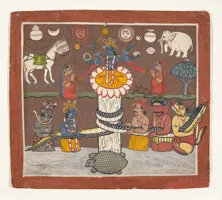 StoryThe churning of the ocean
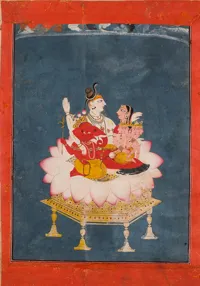 StoryThe birth of Ganesha
 PlaceAyodhya
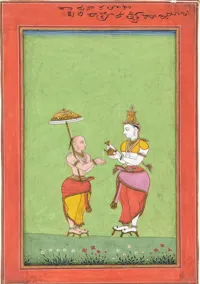 StoryVamana and King Bali
Also named on this page
- Sita
- Sita is worshipped as an incarnation of the goddess Lakshmi and stands at the heart of the Ramayana as Rama's wife.
- Vishvamitra
- Vishvamitra was a king who, the Valmiki Ramayana tells, became a brahmarshi, a sage of the highest rank, through long austerity.
- Sagara
- A king of Ayodhya and Rama's ancestor, whose sons dug through the earth for his sacrificial horse.
- Kapila
- A great sage, described in the Ramayana as a form of Vishnu, near whom the horse was found.
- Amshuman
- Sagara's grandson, who found the horse and learned how his uncles could be freed.
- Dilipa
- Amshuman's son and Bhagiratha's father, who also tried to bring down the Ganga.
- Bhagiratha
- The king whose austerities brought the Ganga down to earth.
- Ganga
- The sacred river, worshipped as a goddess, eldest daughter of the Himalaya.
- Brahma
- The creator god, who granted Bhagiratha's wish.
- Shiva
- The great god, who caught the Ganga's fall in his matted hair.
- Parvati
- The goddess, Shiva's wife, shown watching in the painting above.
- Nandi
- Shiva's bull, shown in the painting above.
- Jahnu
- A sage who drank the Ganga when she flooded his sacrifice, then let her go.
- Indra
- King of the gods, who in the Bhagavata Purana stole Sagara's horse.
- Vishnu
- The god who preserves the world; the Ramayana calls the sage Kapila a form of him.
Sources
- Valmiki Ramayana, Bala Kanda sarga 35 · Verified
- Valmiki Ramayana, Bala Kanda 1.40.10–30 · Verified
- Valmiki Ramayana, Bala Kanda 1.42.12–25 · Verified
- Valmiki Ramayana, Bala Kanda sarga 43 · Verified
- Valmiki Ramayana, Bala Kanda 1.44.2–6 · Verified
- Valmiki Ramayana, Bala Kanda 1.38.2 · Verified
- Valmiki Ramayana, Bala Kanda 1.70.30–43 · Verified
- Encyclopaedia Britannica, "Ganges River" · Verified
- Bhagavata Purana, Canto 9, chapter 8 · Verified
- Bhagavata Purana, Canto 9, chapter 9 9.9.1–13 · Verified