Story
The churning of the ocean
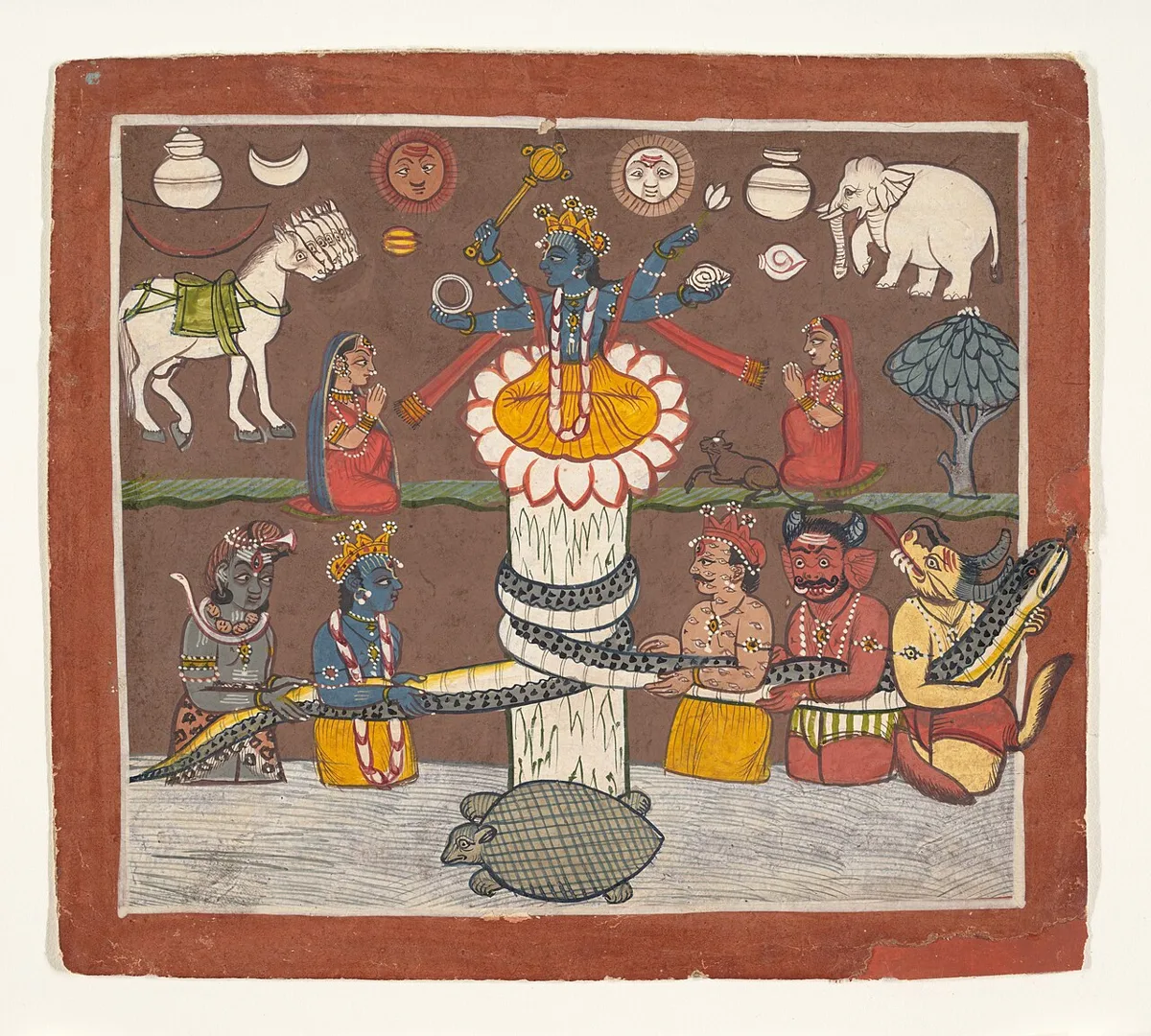
When the gods had lost their strength, Vishnu advised them to join with their rivals, the asuras, and churn the ocean of milk for amrita, the nectar of immortality. Shiva drank the poison that rose first, Lakshmi rose from the waves and chose Vishnu, and Vishnu, as the enchanting Mohini, made sure the nectar went to the gods.
Read the 5-minute story5 min read · told as scenes, from the Bhagavata Purana (Book 8), with the Vishnu Purana
- The gods lose their strengthAfter the sage Durvasa's curse, the three worlds lose their prosperity and the asuras defeat the gods.
- A truce to churn the oceanVishnu advises the gods to join the asuras and churn the ocean of milk for amrita, the nectar of immortality.
- Mountain, serpent and tortoiseMount Mandara is the churning rod and the serpent Vasuki the rope. Vishnu becomes a tortoise to hold the mountain up.
- Shiva drinks the poisonThe first thing to rise is the poison halahala. Shiva drinks it, and it stays in his throat as a blue mark.
- Treasures, and LakshmiThe cow Surabhi, the elephant Airavata, the Kaustubha jewel and more rise. Lakshmi chooses Vishnu as her husband.
- The nectar and MohiniDhanvantari brings the pot of nectar. The asuras seize it, and Vishnu, as Mohini, serves it to the gods.
Understand more
Simple
A curse from the sage Durvasa had left the three worlds without prosperity, and the gods had been beaten by the asuras. Vishnu told them to make a truce with the asuras and churn the ocean of milk together for amrita, the nectar that makes the drinker immortal.
They used Mount Mandara as the churning rod and the great serpent Vasuki as the rope. When the mountain began to sink, Vishnu took the form of a tortoise and held it up on his back.
The first thing to rise was a terrible poison, halahala. Shiva drank it to save all beings, and it stayed in his throat as a blue mark.
Then came treasures, among them the cow Surabhi, the elephant Airavata and the goddess Lakshmi, who chose Vishnu as her husband. Last came Dhanvantari with a pot of nectar. The asuras seized it, but Vishnu appeared as Mohini, an enchanting woman, and served the nectar to the gods.
Detailed
Where the story is told
This page follows the Bhagavata Purana, which tells the churning over five chapters of its eighth book. The Vishnu Purana tells it too, in its first book, and adds two details used here: why the sage Durvasa cursed the three worlds (Indra let his elephant Airavata throw Durvasa’s gift of a garland to the ground), and that Lakshmi rose from the waves standing on a lotus. The two Puranas agree on the churning itself but tell some details differently, and other texts tell it in their own ways.
What the Bhagavata Purana draws out
The Bhagavata sets out the lesson before the churning begins. Vishnu tells the gods to make peace with their rivals, warns them that a poison will rise first, and tells them not to be greedy for the treasures that follow.
Shiva drinks the poison for no reward, out of compassion for all living beings, and with his wife Bhavani’s consent. And the nectar does not go to those who seize it: the asuras snatch the pot, but Vishnu, as Mohini, serves it to the gods.
Vishnu in three forms
In this one story Vishnu appears three times: as the great tortoise who holds Mount Mandara on his back, as Dhanvantari, a form of him learned in medicine, who carries the nectar out of the ocean, and as Mohini, who shares it out.
Where the story lives on
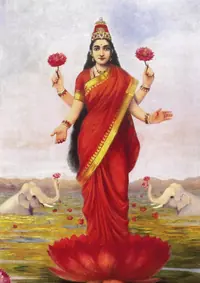
Lakshmi, who rose from this ocean, is the goddess worshipped at Diwali. Explore next: Why is Lakshmi worshipped on Diwali?
The Kumbh Mela, one of the world’s largest gatherings, takes its story from the Puranas: drops of the nectar are said to have fallen at Haridwar, Ujjain, Nashik and Prayagraj, the four places where it is held. Explore next: Prayagraj
The Bhagavata also ties the story to the sky. The asura Rahu stole a sip of the nectar and lost his head to Vishnu’s discus, but the head could not die, and the Purana tells that this is why Rahu pursues the sun and moon, causing eclipses.
Keep exploring
 QuestionWhy is Lakshmi worshipped on Diwali?
 PlacePrayagraj
 StoryThe birth of Ganesha
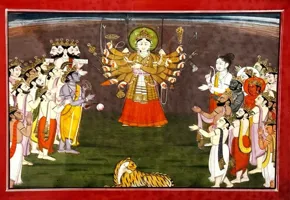 StoryDurga and Mahishasura
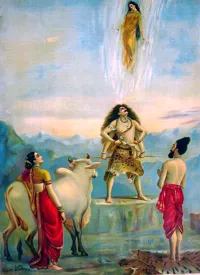 StoryThe descent of the Ganga
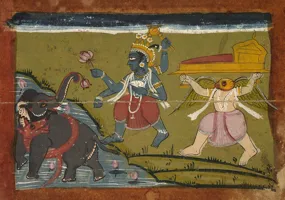 StoryGajendra, the elephant king
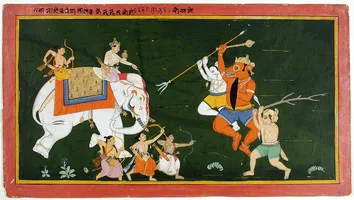 StoryDadhichi gives his bones
Also named on this page
- Vishnu
- The god who preserves the world; in this story he advises the gods, becomes a tortoise and appears as Mohini.
- Shiva
- The god who drank the poison from the ocean to save all beings.
- Durvasa
- A sage whose curse left the three worlds without prosperity.
- Indra
- King of the gods, whose slight to Durvasa's garland brought on the curse.
- Vasuki
- The king of serpents, used as the churning rope.
- Dhanvantari
- A form of Vishnu learned in medicine, who rose from the ocean carrying the pot of nectar.
- Lakshmi
- Goddess of wealth and good fortune, who rose from the ocean and chose Vishnu.
- Airavata
- Indra's elephant, who threw down Durvasa's garland and later rose from the churned ocean.
- Rahu
- An asura who stole a sip of the nectar; his undying head is said to cause eclipses.
- Mohini
- The enchanting woman's form Vishnu took to win the nectar back for the gods.
- Surabhi
- A cow that rose from the ocean, which the sages took for their offerings.
Sources
- Bhagavata Purana, Canto 8, chapter 5 8.5.15–25 · Verified
- Bhagavata Purana, Canto 8, chapter 6 8.6.19–25 · Verified
- Bhagavata Purana, Canto 8, chapter 7 8.7.1–46 · Verified
- Bhagavata Purana, Canto 8, chapter 8 8.8.1–35 · Verified
- Bhagavata Purana, Canto 8, chapter 9 8.9.1–26 · Verified
- Vishnu Purana, Book 1, chapter 9 1.9.2–16, 1.9.98–104 · Verified
- Encyclopaedia Britannica, "Kumbh Mela" · Verified