Tradition
Rama Navami
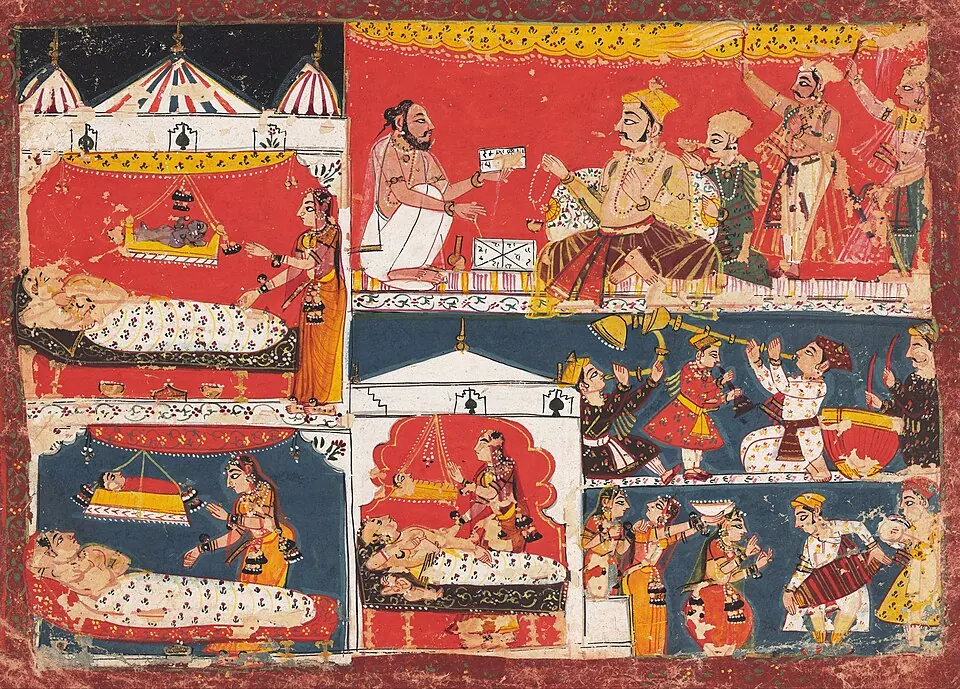
Rama Navami celebrates the birth of Rama on the ninth day of the bright half of Chaitra, in March or April, the day the Valmiki Ramayana gives for his birth. Hindus mark it with worship, fasting, readings of the Ramayana and processions.
- Clean the home and batheThe day starts with cleaning and bathing.
- Worship at homeAn image of Rama is bathed; some families lay baby Rama in a cradle.
- Visit the temple, fast and chantMany fast and recite mantras to Rama.
- Read Rama's storyFrom the Ramayana, or later versions such as Tulsidas's Ramcharitmanas.
- Plays and processionsRamlila performances, and temple images carried in procession.
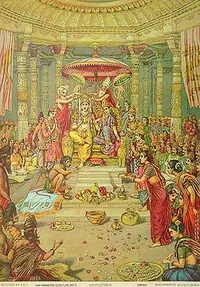
- In parts of South India, a weddingPriests perform a symbolic wedding of Rama and Sita, called kalyanotsavam.
Understand more
Simple
Rama Navami means "Rama's ninth", because the Valmiki Ramayana says Rama was born on the ninth day of the bright half of the month of Chaitra. It usually falls in March or April, and is also the last day of the spring Navratri.
People clean their homes, worship at home and in temples, fast, chant Rama's name and read the Ramayana or later versions such as Tulsidas's Ramcharitmanas. Some place an image of baby Rama in a cradle.
In Ayodhya, traditionally Rama's birthplace, the celebrations are especially grand. In parts of South India, the day also marks Rama and Sita's wedding.
Detailed
The ninth day
Rama Navami means “Rama’s ninth”. The Valmiki Ramayana says that Queen Kausalya gave birth to Rama in the month of Chaitra, on the ninth day of the bright half of the moon, under the star Punarvasu. The festival falls on that day, usually in March or April, which is also the ninth and last day of the spring Navratri. Hindus celebrate it as the birthday of Rama, the seventh avatar of Vishnu. Explore next: Rama
Keeping the day
Many begin by cleaning the home and bathing. At home, families worship and bathe an image of Rama, and some lay an image of baby Rama in a cradle. People visit temples, fast and recite mantras to Rama, and read the Ramayana or later versions such as Tulsidas’s Ramcharitmanas. Ramlila plays act out his story, and in some temples the images of the deities are carried in procession around the grounds.
In Ayodhya
Hindus consider Ayodhya Rama’s birthplace and childhood home, and Rama Navami there is especially grand. At the Ram Mandir, which houses an image of Rama as a five-year-old child, the celebrations include a ritual mark of sunlight on the image’s forehead, called Surya abhisheka. Explore next: Ayodhya
A wedding in the South
Particularly in South India, Rama Navami is also kept as the wedding anniversary of Rama and Sita. Priests perform a symbolic wedding, called kalyanotsavam, with worship and a procession of their images. Explore next: Sita
Read it in the Ramayana
Five-minute chapters from the Valmiki Ramayana. More are being added book by book.
Book 1 · Bala Kanda
Keep exploring
 Person or deityRama
 PlaceAyodhya
 QuestionWhat is the Ramayana, and who wrote it?
 TraditionDiwali
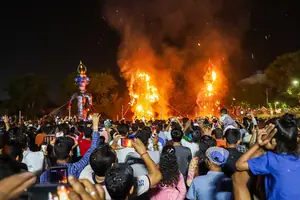 TraditionDussehra
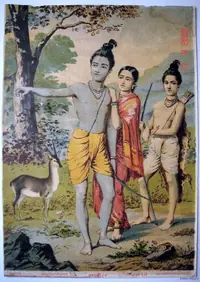 Person or deitySita
Also named on this page
- Kausalya
- Kausalya is King Dasharatha's senior queen and the mother of Rama in the Valmiki Ramayana.
- Vishnu
- The god of whom Hindus worship Rama as the seventh avatar.
- Tulsidas
- Poet of the Ramcharitmanas, a later retelling of the Rama story.
Sources
- Encyclopaedia Britannica, "Rama Navami" · Verified
- Valmiki Ramayana, Bala Kanda 1.18.8 · Verified