Tradition
Navratri and Durga Puja
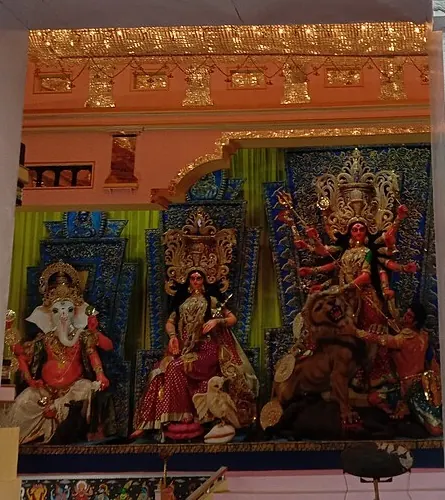
Navratri, the "nine nights", is an autumn festival honouring the divine feminine, held in the month of Ashvin (usually September or October) and ending with Dussehra on the tenth day. In Bengal and Assam it is kept as Durga Puja, celebrating the goddess Durga's victory over the buffalo demon Mahishasura.
- Nights one to threeHonour Durga, the warrior form of the Goddess.
- Nights four to sixHonour Lakshmi, goddess of wealth and good fortune.
- Nights seven to nineHonour Sarasvati, goddess of learning.
- Kanya PujaNine young girls are honoured as forms of the Goddess.
- The tenth day, DussehraDurga's victory over Mahishasura, and in some regions Rama's victory over Ravana.
Understand more
Simple
Navratri means "nine nights". It falls in the month of Ashvin, usually September or October, and honours the Goddess in her different forms. For many it is a time of prayer and fasting.
The first three nights are for Durga, the middle three for Lakshmi and the last three for Sarasvati. The tenth day is Dussehra, also called Vijayadashami.
Regions keep it differently. In Gujarat people dance the garba. In Bengal and Assam it is Durga Puja, and images of Durga are carried in procession and immersed in water on the tenth day. In the north, Ramlila plays of Rama's story lead up to Dussehra.
Detailed
Nine nights for the Goddess
Navratri takes its name from the Sanskrit for “nine nights”. It is held in the month of Ashvin, usually September or October, in honour of the divine feminine, and ends with Dussehra on the tenth day. In some years the lunar calendar shortens it to eight days. For many families it is a time of prayer and fasting, often with a strict vegetarian diet.
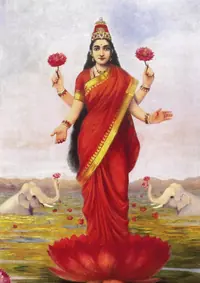
The nights honour the Goddess in different forms. The first three are given to Durga, the middle three to Lakshmi, goddess of wealth and good fortune, and the last three to Sarasvati, goddess of learning. On Kanya Puja, nine young girls are honoured as forms of the Goddess. Explore next: Why is Lakshmi worshipped on Diwali?
Durga and Mahishasura
The story at the heart of the festival is told in the Devi Mahatmya, a Sanskrit text of about the 5th or 6th century CE that forms part of the Markandeya Purana. It was the first text centred entirely on the Goddess, and devotees learn and recite it by heart.
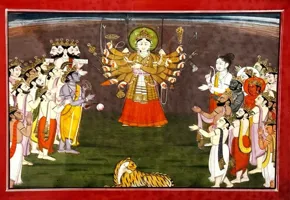
According to this tradition, the buffalo demon Mahishasura could not be defeated by any of the gods. So Brahma, Vishnu, Shiva and the others brought their energies together, and from that shared power Durga came forth, greater than any of them. She is shown riding a lion, with eight or ten arms, each holding a weapon given by one of the gods, and she defeated Mahishasura.
Many ways to keep it
- Bengal and Assam: Navratri is kept as Durga Puja. Images of Durga are carried in procession and immersed in water on the tenth day. Durga Puja in Kolkata was added to UNESCO’s list of the world’s intangible cultural heritage in 2021.
- Gujarat: People gather each night to dance the garba.
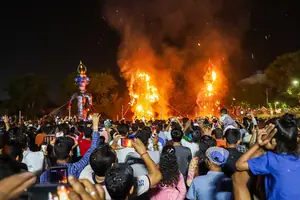
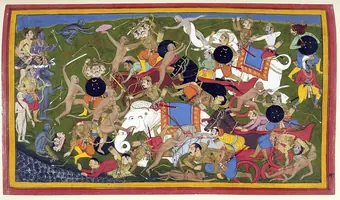
- North India: Ramlila plays act out the Ramayana, and on the tenth day many celebrate Rama’s victory over Ravana. Explore next: The war in Lanka and Rama’s return
However it is kept, the tenth day, Dussehra or Vijayadashami, celebrates the victory of good over evil. Explore next: Dussehra
Keep exploring
 TraditionDussehra
 QuestionWhy is Lakshmi worshipped on Diwali?
 TraditionDiwali
 StoryThe war in Lanka and Rama's return
 StoryDurga and Mahishasura
Also named on this page
- Rama
- Rama is the central figure of the Ramayana, the eldest son of King Dasharatha of Ayodhya, and is worshipped by Hindus as the seventh avatar of Vishnu.
- Lanka
- Lanka is Ravana's island fortress across the sea, where he held Sita captive.
- Ravana
- Ravana was the ten-headed king of the rakshasas who ruled Lanka.
- Mahishasura
- The buffalo demon whom no god could defeat, until Durga came forth.
- Brahma, Vishnu and Shiva
- Gods whose energies came together to bring forth Durga.
- Lakshmi
- Goddess of wealth and good fortune, honoured on the middle three nights.
- Sarasvati
- Goddess of learning, honoured on the last three nights.
- Ganesha
- A god, shown with Lakshmi beside Durga in the pandal pictured above.
Sources
- Encyclopaedia Britannica, "Navratri" · Verified
- Encyclopaedia Britannica, "Durga" · Verified
- Encyclopaedia Britannica, "Devi Mahatmya" · Verified
- Encyclopaedia Britannica, "Sarasvati" · Verified
- Encyclopaedia Britannica, "Dussehra and Vijayadashami" · Verified