The Ramayana · Book 2, Ayodhya Kanda
The crowning that wasn't
Chapter 7 of 41 · 4 min read · as told in the Valmiki Ramayana, Ayodhya Kanda
A king grows old
Bharata had gone to stay with his mother’s family in Kekaya, and Shatrughna had gone with him. In Ayodhya, King Dasharatha watched his eldest son, Rama, and his heart filled.
Valmiki pauses here to describe Rama at length. He was gentle and truthful, and he never answered a harsh word with another. A single kindness was enough to make him grateful, and he never dwelt on wrongs done to him. He was learned and skilled with the bow, yet never proud of his strength. The people loved him, the epic says, as the body loves its breath.
Dasharatha felt his age. He saw omens in the sky and on earth, and he longed to see Rama crowned while he still lived. With his ministers, he resolved to make Rama yuvaraja, the crown prince, who would share the kingdom with him. He called kings and leading citizens from every part of the land, though not yet the king of Kekaya or King Janaka. They would hear the news later.
One voice in the assembly
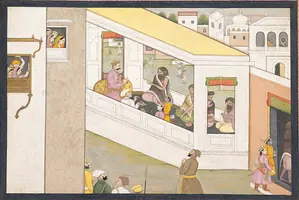
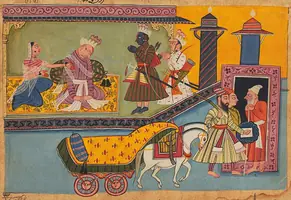
The king spoke to the gathering in a voice deep as thunder. He had guarded his people for many years under the white royal umbrella, he said, and his body had grown old in that service. Now he wished to rest, and to hand his duties to Rama, if they agreed.
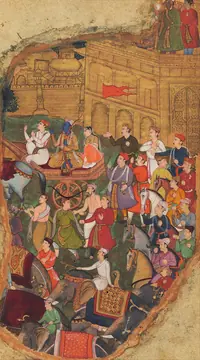
The hall erupted with joy, like peacocks crying at a rain cloud. The brahmanas, the citizens and the country people talked among themselves and came back with one answer: crown Rama. They longed to see him ride a great elephant beneath the royal umbrella.
Dasharatha asked, as if surprised, why they wanted his son to rule while he himself still ruled justly. They answered with Rama’s virtues. When he came home from battle with Lakshmana, they said, he asked after the people as if they were his own family, their children, their sacred fires, their servants. He grieved in their troubles and rejoiced in their festivals like a father.
“Tomorrow, under Pushya”
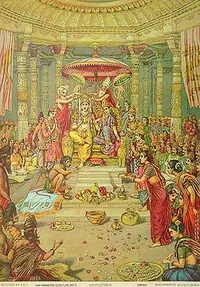
The king asked the sage Vasishtha and the priest Vamadeva to prepare the rites, and they set the household to work: gold and jewels, white garlands, honey and ghee, a royal elephant, a white umbrella, a hundred golden jars of water. Then Sumantra, the king’s charioteer, brought Rama to the palace.
Rama bowed and touched his father’s feet, and Dasharatha lifted him up and embraced him. He told Rama that the people had chosen him, and gave him a father’s counsel: be humble, master desire and anger, and keep ministers and people content. Friends ran to tell Rama’s mother, Queen Kausalya, who gave them gold and cows in thanks.
That same day the king called Rama back. He had had dreadful dreams, he said, and seen bad omens. The minds of living beings are unsteady, even good minds. The crowning should be tomorrow, under the star Pushya, while Bharata was still away. Tonight Rama and Sita must fast and sleep on sacred grass, and his friends must guard him well, for great undertakings meet many obstacles.
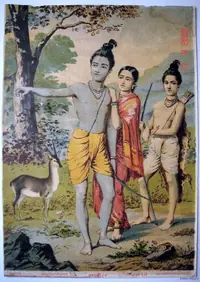
Rama went to his mother’s rooms. Kausalya was in the shrine, praying for him, with Sumitra, Lakshmana and Sita beside her. When Rama told her the news, she wept with joy and blessed him. Rama turned to Lakshmana. Rule the earth with me, he said: you are my second self, and I want life and kingdom for your sake too.
A night of waiting
Vasishtha came to Rama’s house to begin the fast, and as he left he could barely move through the crowds. The streets were swept and sprinkled, banners flew from every roof, and the roar of the people sounded like the sea.
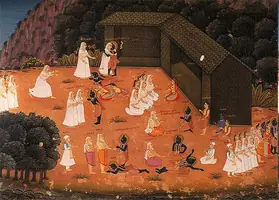
That night Rama and Sita worshipped Narayana, poured ghee into the sacred fire and lay down in silence on kusha grass. Before dawn Rama rose, heard the bards’ songs and said his prayers. All Ayodhya was waking to decorate itself. Flags rose from temples, shops and trees. Lamps lined the streets so the city would stay bright after dark. Villagers poured in from every side to see their prince crowned.
Manthara on the roof
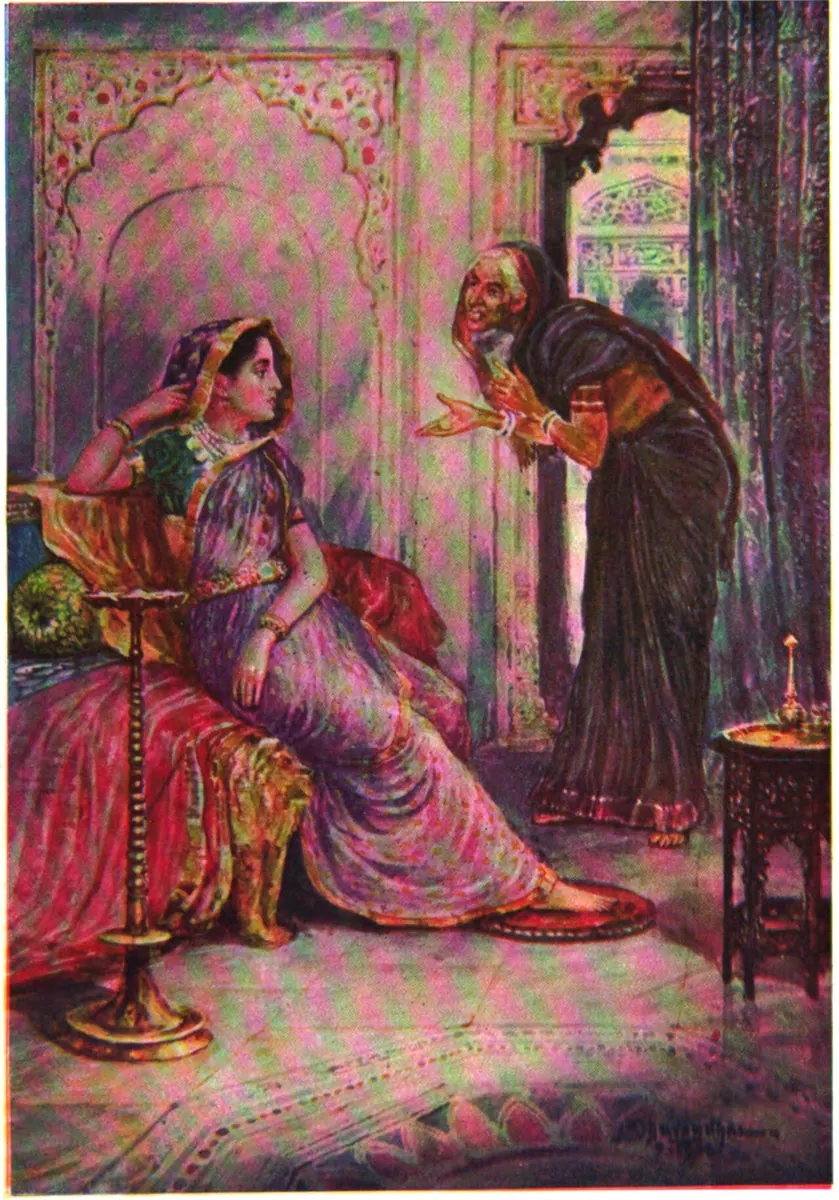
By chance, Manthara, the maid who had served Queen Kaikeyi since her birth, climbed to a palace roof and looked down on the shining city. She asked a joyful servant what was happening. King Dasharatha, she was told, would crown Rama tomorrow.
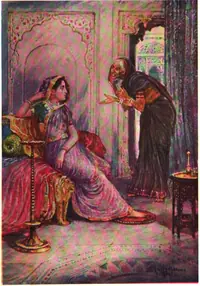
Manthara hurried down in a fury. She found Kaikeyi resting and spoke harshly: Kaikeyi’s good fortune, she warned, was about to vanish. The king spoke of dharma, she said, but favoured Kausalya, and once Rama was crowned, Bharata would be pushed aside.
Kaikeyi’s first answer surprises many readers. She rose, delighted, and gave Manthara a splendid ornament. She saw no difference between Rama and Bharata, she said, and she was glad Rama would be king. Manthara could ask for any reward she liked.
The crowning was set for the morning. But Manthara had not finished.
End of chapter 7.
In this chapter
 Person or deityDasharatha
 Person or deityRama
- Person or deityVasishtha
 Person or deityKausalya
 Person or deitySumitra
- Person or deityLakshmana
 Person or deitySita
 Person or deityBharata
- Person or deityShatrughna
 Person or deityManthara
 Person or deityKaikeyi
 Person or deityJanaka
 PlaceAyodhya
Also named in this chapter
- Valmiki
- The sage and poet of the Ramayana, who pauses the story here to describe Rama's character.
- Sumantra
- King Dasharatha's charioteer and minister, sent to bring Rama to the palace.
- Vamadeva
- A royal priest who, with Vasishtha, prepares the crowning.
- Narayana
- Vishnu, whom Rama and Sita worship on the night before the crowning.
Keep exploring
Sources
- Valmiki Ramayana, Ayodhya Kanda 2.1.1–5, 34–50 · Verified
- Valmiki Ramayana, Ayodhya Kanda 2.2.1–54 · Verified
- Valmiki Ramayana, Ayodhya Kanda 2.3.1–49 · Verified
- Valmiki Ramayana, Ayodhya Kanda 2.4.1–45 · Verified
- Valmiki Ramayana, Ayodhya Kanda 2.5.1–26; 2.6.1–28 · Verified
- Valmiki Ramayana, Ayodhya Kanda 2.7.1–36 · Verified