Tradition
Ganesh Chaturthi
Ganesh Chaturthi celebrates the birth of Ganesha, the elephant-headed god of beginnings and remover of obstacles. It begins on the fourth day of the month of Bhadrapada, in August or September, lasts up to ten days, and ends with images of Ganesha immersed in water.
- The fourth day of BhadrapadaGanesha's birthday. An image of him is brought into the home or set up in a public pandal.
- Up to ten days of worshipA small ritual in many homes; a large public celebration in many neighbourhoods.
- ImmersionAt the end, the images are immersed in water.
Understand more
Simple
Ganesh Chaturthi is the festival of Ganesha's birth. Chaturthi means "the fourth day", and it begins on the fourth day of Bhadrapada, the sixth month of the Hindu calendar, in August or September.
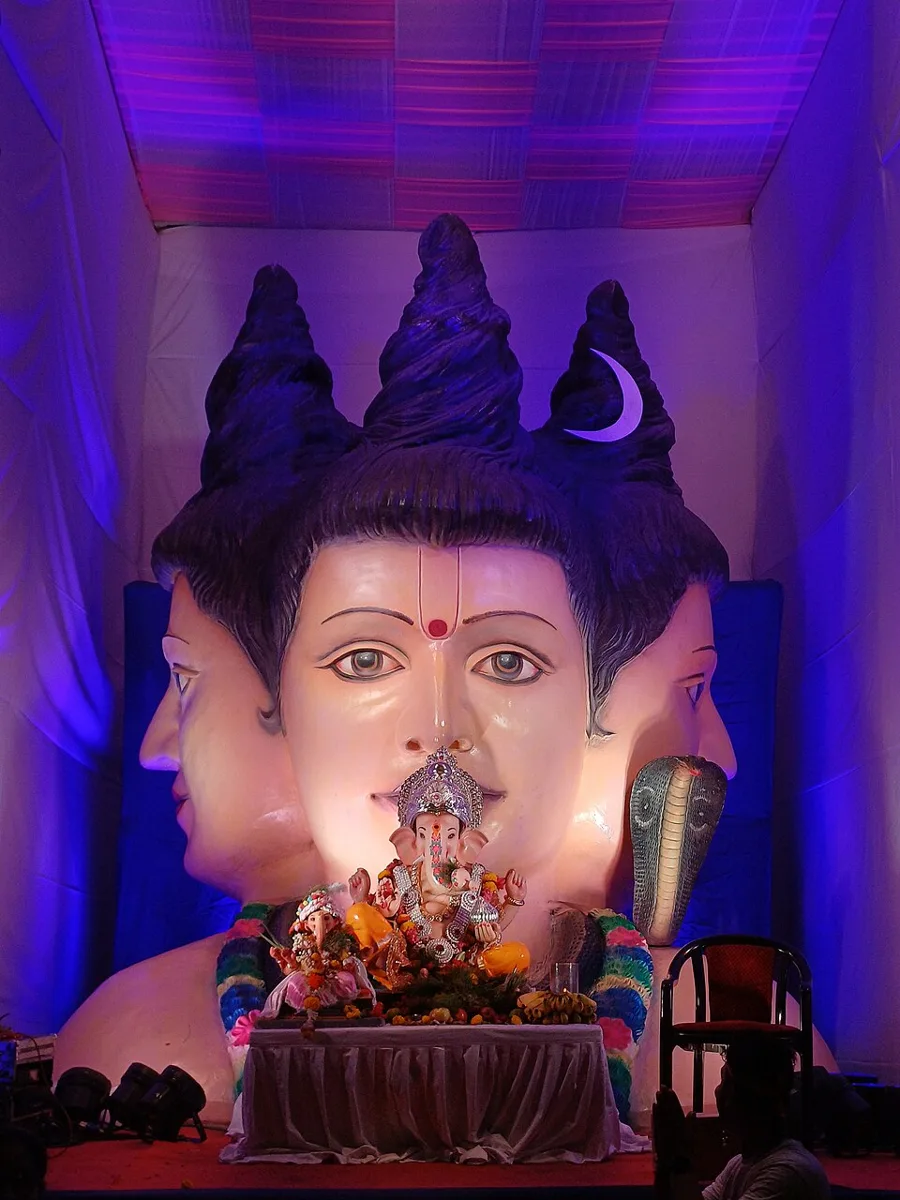
Ganesha is the god of beginnings, worshipped before any important undertaking, and the remover of obstacles. Families bring an image of him home, and neighbourhoods set up large images in public shrines called pandals.
The festival lasts up to ten days. At the end, the images are immersed in water.
Detailed
Ganesha’s birthday
Ganesh Chaturthi celebrates the birth of Ganesha. It begins on the fourth day, chaturthi, of Bhadrapada, the sixth month of the Hindu calendar, which falls in August or September, and it lasts up to ten days.
Ganesha is the elephant-headed god of beginnings. He is worshipped before any important undertaking, and is the patron of scholars, bankers, scribes and authors. He leads the ganas, Shiva’s attendants, which gives him his name, and is the remover of obstacles. He is fond of round sweets, and rides a rat, a sign of his power to get past any obstacle.
How he got his elephant head
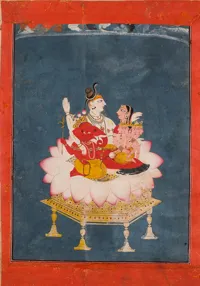
There are several stories of his birth. In the best known, the goddess Parvati shaped a boy from the paste on her body while bathing. Shiva, or in some tellings one of his attendants, cut off the child’s head, and Shiva then restored him with the head of an elephant. He is honoured as the son of both Shiva and Parvati. Explore next: The birth of Ganesha
At home and in the street
For many families, Ganesh Chaturthi is a small ritual at home. It is also a great public celebration, with large images in pandals, shrines built for the festival by neighbourhoods and communities. At the end of the festival, the images are immersed in water.
A public festival
The public side of the festival has a history. In 1893, the nationalist leader Bal Gangadhar Tilak, who was based in Pune, organised the Ganesh festival as a way to widen the popularity of the movement for India’s independence, which at the time reached mostly the upper classes.
Keep exploring
Also named on this page
- Ganesha
- The elephant-headed god of beginnings, son of Shiva and Parvati.
- Parvati
- The goddess who, in the best-known story, formed Ganesha.
- Shiva
- Ganesha's father, who gave him an elephant's head.
- Bal Gangadhar Tilak
- A leader of India's independence movement, based in Pune.
Sources
- Encyclopaedia Britannica, "Ganesh Chaturthi" · Verified
- Encyclopaedia Britannica, "Ganesha" · Verified
- Encyclopaedia Britannica, "Bal Gangadhar Tilak" · Verified