5-minute story
Hanuman's search for Sita
5 min read · as told in the Valmiki Ramayana, Sundara Kanda
The leap
Ravana had carried Sita off to his city of Lanka, somewhere across the sea, and Rama did not know where she was. His ally Sugriva had sent thousands of vanaras, the monkey people of the Ramayana, out in every direction to search for her. Among those who went south were the young prince Angada, the wise elder Jambavan, and Sugriva’s minister Hanuman, son of the wind god.
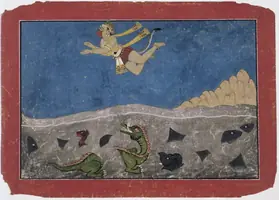
Guided by the words of Sampati, they learned that Sita was held across the ocean. Hanuman crossed the whole sea in a single leap.
A city at night
From the peak of a mountain he looked down on Lanka. It sat on a summit of its own, ringed by moats full of lotuses and walls of gold. Tall pale mansions rose inside, and guards with bows, tridents and spears watched from every side.
Hanuman did not storm the gates. He waited for the sun to set. Then he made himself as small as a little creature and slipped into the city at dusk, unseen.
Not Sita
He searched house after house, and then Ravana’s own palace. In the inner rooms he came upon a beautiful woman asleep, covered in pearls and jewels. His heart leapt: surely this was Sita.
Then he stopped himself. Sita, parted from Rama, would never sleep at ease, dressed in jewels, in another man’s house. This was someone else. It was Mandodari, Ravana’s chief queen. Hanuman put his joy aside and went on searching.
The woman in the grove
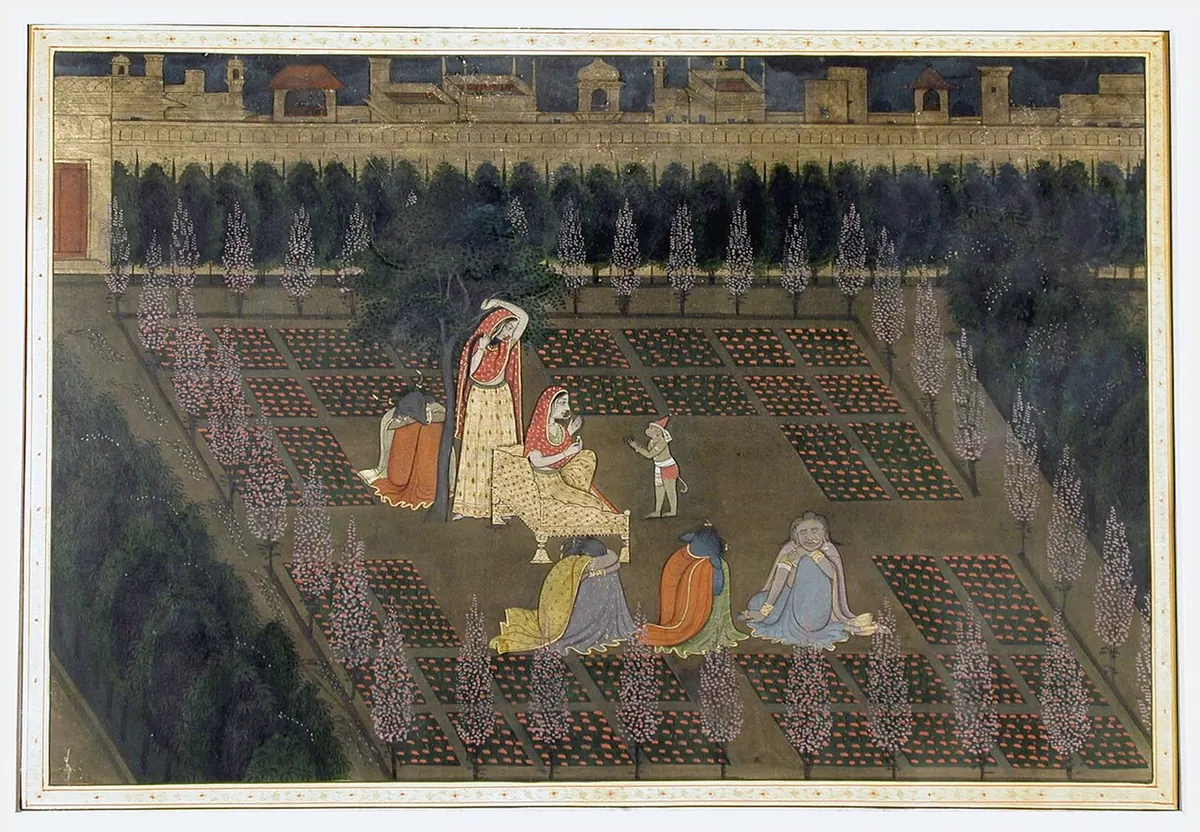
At last, in the Ashoka grove, he saw a woman in soiled clothes, thin from fasting, sighing, with rakshasi guards all around her. He knew her by the ornaments Rama had described. It was Sita. Hanuman hid in the leaves of a tree above her and watched.
As he waited, Ravana himself came into the grove. He told Sita she had two months to accept him. If she still refused, she would be killed. Sita would not give way.
A story told softly
After much thought, Hanuman began, very gently, to tell a story within her hearing. He spoke of King Dasharatha, and of his son Rama, who went to the forest to keep his father’s word; of how Sita was carried away; of Rama’s friendship with Sugriva; and of the vanaras sent out to find her. He ended with his own leap across the sea.
Sita looked up into the tree, astonished, and saw him.
He came down and showed her a ring engraved with Rama’s name, so she would know who had sent him. As she held it, she felt as if she had reached her husband himself.
Hanuman offered to carry her back to Rama there and then. Sita declined. Instead she gave him the crest jewel from her hair, and a memory from their days at Chitrakuta, so that Rama would know the messenger had truly found her. She told him she could hold on for only one more month.
The messenger lets himself be caught
The task was done, but Hanuman thought it through. A good messenger, he reasoned, may take on other aims as long as they never harm the main one. He wanted to see Ravana’s strength with his own eyes. So he tore the grove apart, and fought off the warriors sent against him.
Ravana sent his young son Aksha, in a chariot drawn by eight horses. Hanuman admired the young prince’s skill and did not want to kill him. But an enemy left unchecked, he decided, grows like a spreading fire. Aksha fell.
When at last Hanuman was bound, he accepted it, because it would bring him before Ravana. Standing before the king, he said plainly who he was: a messenger of Rama.
Ravana wanted him killed. His brother Vibhishana objected that a messenger must never be put to death. So Ravana chose humiliation instead: set the vanara’s tail on fire and parade him through the streets.
In the grove, Sita heard what was happening. She prayed to Agni, the god of fire, to be cool to Hanuman. The flames on his tail burned bright, but they did not hurt him.
Lanka in flames
Hanuman broke free and leapt from rooftop to rooftop, carrying the fire with him. He set the mansions of Ravana’s chief warriors alight, sparing only Vibhishana’s house, until fire surrounded the whole city.
Then a terrible thought stopped him. If all of Lanka was burning, had Sita burned too? For a moment he was ready to give up his own life. Then he heard the Charanas, celestial beings, marvelling that the whole city had burned and yet Sita had not. He went back and saw her with his own eyes, unharmed. Only then did he turn for home.
Home with the news
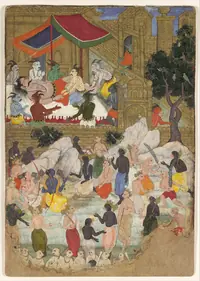
On Mount Mahendra, across the sea, the vanaras heard him coming. Old Jambavan said that a roar like that could only mean success. They crowded round him with fruits and roots. Hanuman bowed to Jambavan and to Angada, and said simply: Sita has been seen.
Then he came to Rama and told him everything. Sita was alive, held in Ravana’s grove, sleeping on bare ground, refusing Ravana and wearing her hair in a single braid. She had a month left. He handed Rama the crest jewel from her hair.
Now Rama knew where Sita was. What he did next is the story of the war. Explore next: The war in Lanka and Rama’s return
Meet the people and places in this story
Also named in this story
- Rama
- Rama is the central figure of the Ramayana, the eldest son of King Dasharatha of Ayodhya, and is worshipped by Hindus as the seventh avatar of Vishnu.
- Chitrakuta
- Chitrakuta is the forest hill where Rama, Sita and Lakshmana first made their home in exile, and where Bharata came to beg Rama to return.
- Dasharatha
- Dasharatha was the king of Ayodhya and the father of Rama, Bharata, Lakshmana and Shatrughna.
- Ravana
- Ravana was the ten-headed king of the rakshasas who ruled Lanka.
- Sugriva
- Sugriva is the vanara prince who became Rama's sworn ally in the Valmiki Ramayana.
- Vibhishana
- Vibhishana is Ravana's brother in the Valmiki Ramayana.
- Angada
- A young vanara prince in the search party that went south.
- Jambavan
- The wise elder of the search party that went south.
- Sampati
- His words told the vanaras that Sita was held across the ocean.
- Mandodari
- Ravana's chief queen.
- Aksha
- Ravana's young son, who fought Hanuman in the grove.
- Agni
- The god of fire. Sita prayed to him to be cool to Hanuman.
Sources
- Valmiki Ramayana, Sundara Kanda sarga 2 · Verified
- Valmiki Ramayana, Sundara Kanda sargas 10–11 · Verified
- Valmiki Ramayana, Sundara Kanda sarga 22 · Verified
- Valmiki Ramayana, Sundara Kanda sarga 31 · Verified
- Valmiki Ramayana, Sundara Kanda sarga 47 · Verified
- Valmiki Ramayana, Sundara Kanda sarga 41 · Verified
- Valmiki Ramayana, Sundara Kanda sarga 50 · Verified
- Valmiki Ramayana, Sundara Kanda sarga 53 · Verified
- Valmiki Ramayana, Sundara Kanda sarga 55 · Verified
- Valmiki Ramayana, Sundara Kanda sarga 57 · Verified
- Valmiki Ramayana, Sundara Kanda sarga 65 · Verified
- Encyclopaedia Britannica, "Hanuman" · Verified
- Valmiki Ramayana, Sundara Kanda sarga 2 · Verified
- Valmiki Ramayana, Sundara Kanda sarga 15 · Verified
- Valmiki Ramayana, Sundara Kanda 5.36.2–4 · Verified
- Valmiki Ramayana, Sundara Kanda sarga 38 · Verified
- Valmiki Ramayana, Sundara Kanda sarga 54 · Verified
- Valmiki Ramayana, Kishkindha Kanda 4.3.1–35; 4.7.3–4 · Verified